
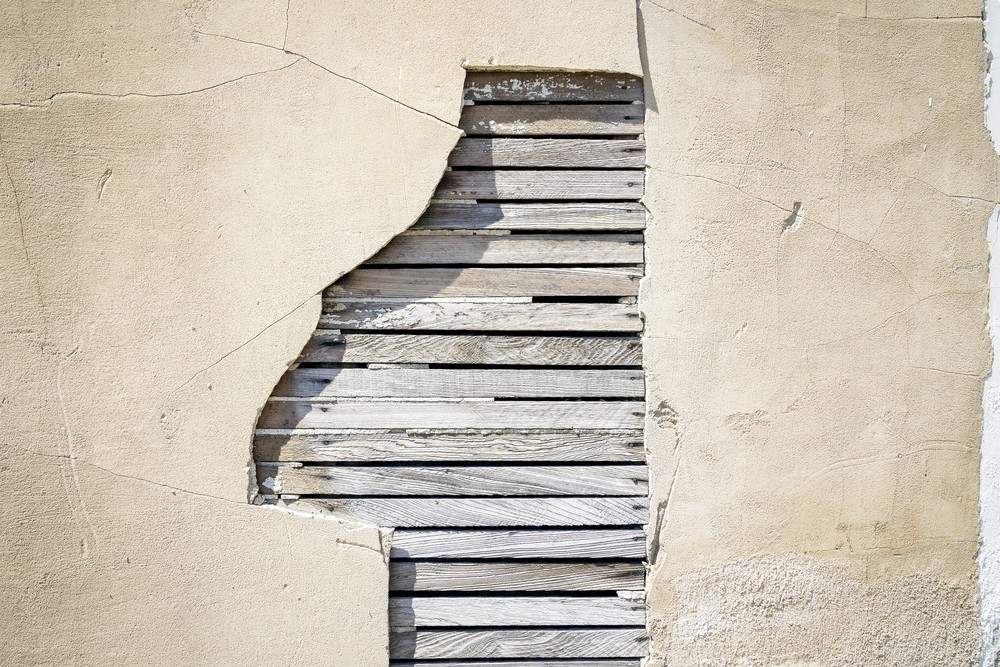
Those faint stains near your baseboard or patches of paint that have begun to separate from the surface may be early signs of water damage on plaster walls. Because plaster absorbs moisture slowly, the damage you see today may actually reflect water that entered the wall days or even weeks earlier.
Plaster behaves differently from drywall, which means moisture problems can develop quietly inside the wall before becoming visible. If you suspect you may have water damaged plaster, this guide explains what to look for, how to address it before mold spreads, and when it’s time to call a professional for water damage restoration.
Table of Contents
Why Plaster Walls React Differently to Water
Plaster walls are built very differently from modern drywall systems. Traditional plaster is applied in layers over wood lath, creating a surface that can last for decades when it stays dry. But because the material is porous, it absorbs moisture slowly and releases it just as slowly once water enters the wall.
Because of this, the signs of water damage do not always appear right away. Water may travel through the wall structure or settle between plaster layers before anything changes on the surface. Sometimes, a leak that occurred weeks earlier won’t manifest until a stain appears or the paint begins to separate from the wall.
Many homes built before the middle of the twentieth century still rely on plaster construction. When moisture becomes trapped in those walls, the material can hold dampness longer than drywall would.
If the wall remains wet long enough, mold can begin to develop within 24 to 48 hours. Situations like this are one reason our technicians pay close attention to plaster walls when investigating hidden moisture inside older homes.
The Most Common Signs of Water Damage on Plaster Walls
Plaster water damage is rarely obvious. In many homes, the signs appear gradually as moisture moves through the plaster layers and the structure behind them. Recognizing the early clues often makes it easier to stop the problem before the damage spreads.
Discoloration and Staining
A yellow or brown patch on the wall is often the first clue that something is going on behind the plaster. These stains tend to show up near ceiling corners, window frames, or exterior walls where moisture can enter from outside or from above.
The color change occurs when water moves through the plaster, leaving minerals behind as it dries. Even when the surface feels dry, the stain may indicate a leak that occurred earlier.
Bubbling or Peeling Paint
Paint that starts lifting from the wall often indicates moisture trapped beneath the surface. In many homes, this is the first visible change people notice.
At first, it may look like a small bubble or a section of paint that refuses to lie flat. As moisture works its way through the plaster, the paint gradually loses its bond with the wall.
Soft, Spongy, or Crumbling Plaster
Plaster walls should feel solid when you press on them. If a section of the wall feels slightly soft or begins to break apart along the edges, moisture has likely been present in that area for some time.
By the time plaster begins crumbling, the material has already weakened, and repairs often involve removing the damaged section.
Cracks Running Through the Surface
Irregular cracks near stained areas often indicate that moisture has spread unevenly across the wall.
As plaster absorbs moisture and then dries, the material expands and contracts slightly. Over time, that movement weakens the surface, and small cracks begin forming around the affected area.
Efflorescence (White Powdery Deposits)
Sometimes water damage leaves behind a chalky white residue on the wall. This powdery material is called efflorescence, and it commonly appears on basement walls or exterior-facing plaster.
Efflorescence forms when moisture carries dissolved minerals through the wall and deposits them on the surface as the water evaporates. The residue itself is not mold, but it does signal that water is moving through the wall.
Musty Odor Without Visible Mold
A persistent musty odor inside a room often suggests that moisture is trapped inside the wall cavity or behind the plaster surface.
In older homes, this smell is sometimes dismissed as the scent of an aging house. In reality, it may indicate that moisture has settled within the wood lath behind the plaster.
Visible Mold Growth
When mold becomes visible on plaster walls, the moisture problem has usually been present for a while. Addressing the moisture source quickly helps prevent the problem from spreading further into the wall structure.
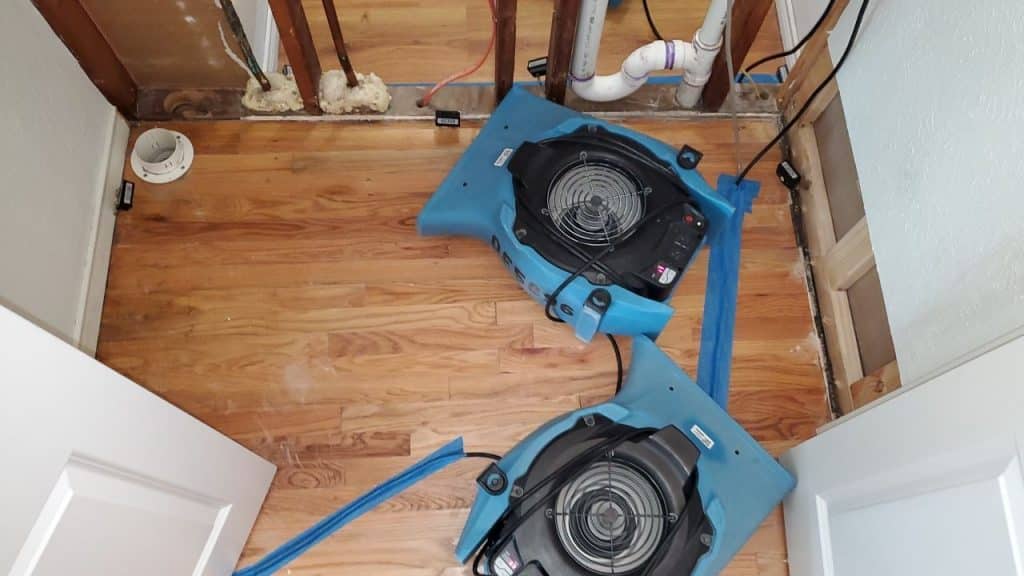
Early vs. Late Stage Damage: What’s the Difference?
Water damage in plaster walls often develops gradually, starting with subtle cosmetic changes before progressing into structural deterioration.
Understanding the difference between early warning signs and more advanced damage helps you determine how to repair your water damaged wall plaster.
| Early Stage Signs | Late Stage Signs |
|---|---|
| Faint discoloration or staining | Sagging or bulging plaster |
| Slight paint bubbling | Crumbling or soft plaster |
| Musty odor without visible mold | Visible mold growth |
| Hairline cracks near damp areas | Structural cracks with seperation |
| Efflorescence on masonry plaster | Exposed lath or detached plaster |
When water damage is caught early, the wall often has a much better chance of being repaired without major reconstruction. Once plaster begins separating from the wall or mold becomes visible, repairs usually become more involved, and your property may require reconstruction.
What You Can’t See: Hidden Moisture in Plaster Walls
Traditional plaster is applied in several layers over wood lath. When water enters the wall, moisture can become trapped between those layers or settle within the framing cavity. A small stain on the surface may represent a much larger damp area hidden behind the plaster.
During inspections, technicians rely on moisture mapping, specialized meters, and infrared imaging to locate hard-to-see damp areas inside walls without opening them.
Finding hidden moisture early can prevent long-term problems such as mold growth or structural weakening of the plaster.
Plaster vs. Drywall: Does It Matter?
Plaster and drywall react to water in very different ways. Drywall tends to absorb moisture quickly and often breaks down soon after becoming saturated. When that happens, the damaged section usually needs to be removed and replaced.
Plaster reacts more slowly. Because it absorbs moisture gradually, it sometimes has a better chance of being dried and repaired if the problem is discovered early. The downside is that plaster walls can trap moisture for longer, which is why a careful inspection is often necessary before deciding how to repair the damage.
When drywall becomes heavily saturated, it may be time to schedule drywall water damage restoration repairs, which may involve removing sections of the wall and replacing the material once the moisture source has been eliminated.
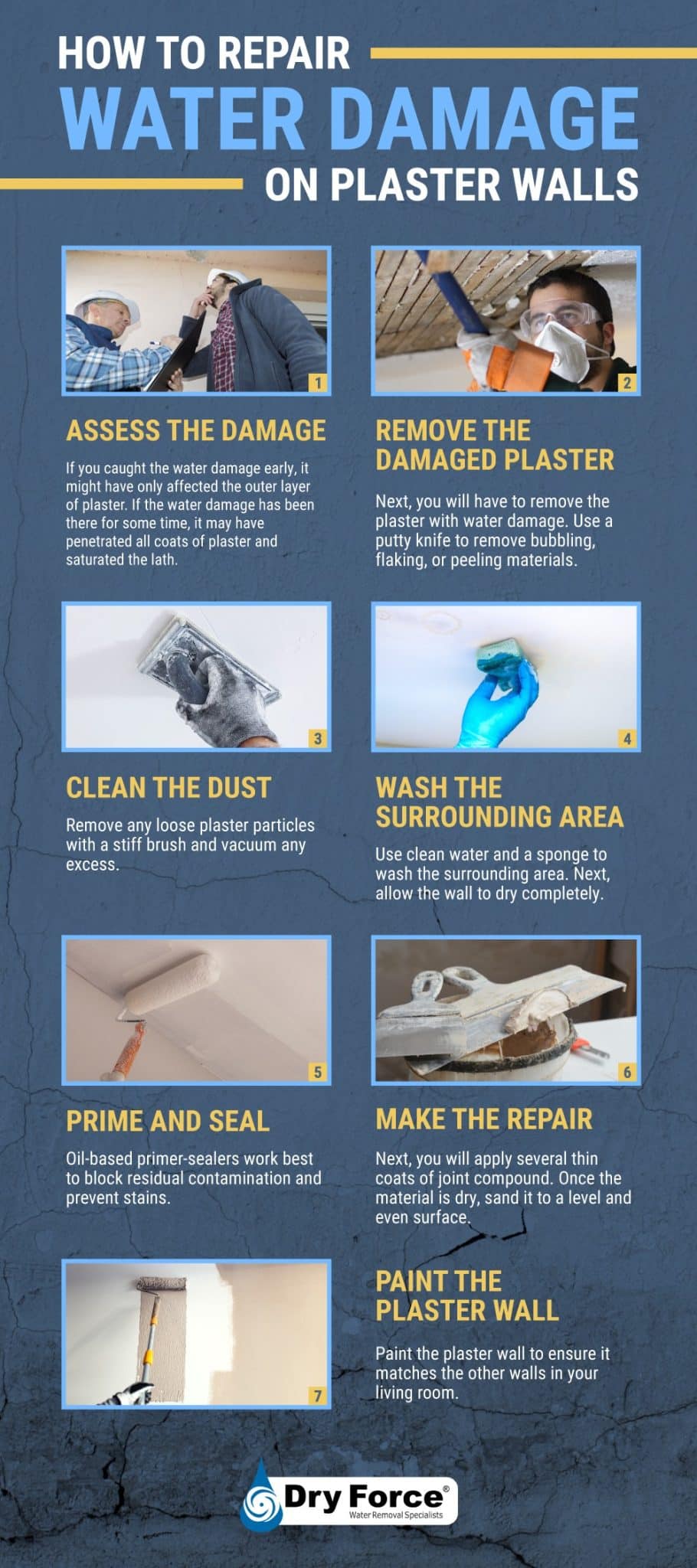
7 Steps to Fix Water Damage on Plaster Walls
When you notice that your plaster walls are bubbling, flaking, or stained, there is likely some water damage. Here is how to repair water-damaged plaster walls without causing more damage.
Step One: Assess the Damage
If you caught the water early, it might have only affected the outer layer of plaster. If the water damage has been there for some time, it may have penetrated all coats of plaster and saturated the lath. If this is the case, contact a professional to assess potentially damaged rotten wood or rusted metal.
Step Two: Remove the Damaged Plaster
Next, you will have to remove the plaster with water damage. Discard the bubbling, flaking, or peeling material with a putty knife. Scrap the wet, damaged plaster until you hit hard plaster.
Tips & Insights: Do I Need to Replace Subfloors With Water Damage?
Step Three: Clean the Dust
Remove any loose plaster particles with a stiff brush and vacuum any excess.
Step Four: Wash the Surrounding Area
Use clean water and a sponge to wash the surrounding area, then allow the wall to dry completely.

Step Five: Prime and Seal
Oil-based primer-sealers work best to block residual contamination and prevent stains. Let the quick-dry primer dry for about an hour before moving on to the next step.
Step Six: Make the Repair
Next, you’ll apply several thin coats of a joint compound. Spread the compound thin and evenly, and scrape any excess off the area. When dry, sand to a level and even surface. Continue this process several times to make a long-lasting and invisible repair.
Step Seven: Paint the Plaster Wall
When your final coat of compound is dry and sanded smooth, wipe off excess dust with a damp cotton cloth. Paint the plaster wall to ensure it matches the other walls in your living room.
When to Call a Water Damage Professional
Some small stains or cosmetic issues may appear harmless at first. When moisture recurs or the wall begins changing texture, the situation often needs closer inspection.
It may be time to schedule a professional inspection if any of the following apply:
- Visible Mold On Or Near The Plaster
- Plaster Feels Soft, Spongy, Or Begins Crumbling
- Damage Returns After Painting Or Patching
- A Musty Smell Persists, But The Source Is Unknown
- The Damaged Area Covers More Than Ten Square Feet
- Water Damage Appears Near Electrical Fixtures Or Outlets
At Dry Force, our team regularly helps homeowners locate hidden moisture inside walls, assess how far the damage has spread, and safely restore affected areas.
If you’re seeing these warning signs in your home, our experienced water damage restoration professionals can help you assess the situation and recommend the right next steps.
FAQ: Water Damage and Plaster Walls
What does water damage look like on plaster walls?
Water damage on plaster walls usually shows up as stains, bubbling paint, cracking, or soft spots when pressed. In some homes, the first clue may be a musty smell. These signs usually mean moisture has entered the plaster or the wall behind it.
How can you tell if plaster walls have water damage?
Look for changes in the wall’s surface. Discoloration, peeling paint, or plaster that feels slightly soft are common clues. You may also notice cracks forming near damp areas or a persistent musty odor in the room, which can signal moisture trapped behind the plaster.
Is water-damaged plaster dangerous?
It depends on how long the moisture has been present. Small stains may only require minor repairs, but walls that stay damp can eventually support mold growth or weaken the plaster structure. Addressing the moisture source early usually prevents the issue from becoming more serious.
Can water-damaged plaster be repaired?
Yes, in many cases it can. If the damage is caught early, repairs may only involve patching the affected area once the moisture source is fixed. When plaster softens, crumbles, or separates from the wall, the affected section may need to be removed and rebuilt.
What happens if you ignore water damage in plaster walls?
Ignoring water damage often allows moisture to remain trapped inside the wall. Over time, that can lead to mold growth, spreading stains, and plaster that begins breaking down. What starts as a small cosmetic issue can eventually turn into a larger repair.
Does water-damaged plaster always mean mold?
Not always. Water damage does not automatically mean mold is present. However, mold can begin to grow within 24-48 hours if moisture remains inside the wall long enough.