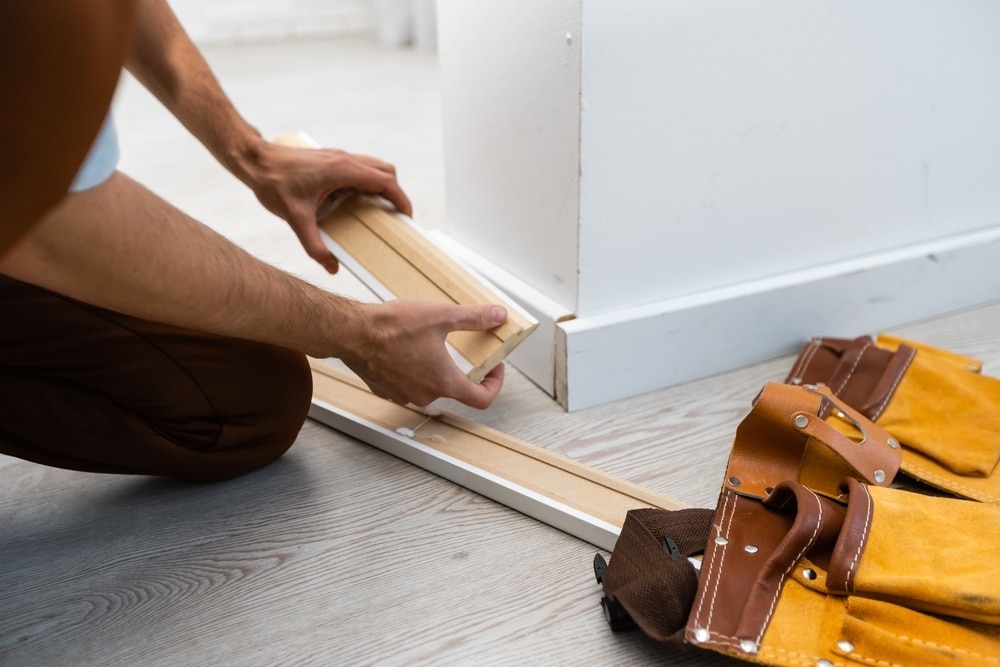
Baseboard water damage is often one of the first visible signs of a larger water issue inside your home, manifesting as peeling paint or a faint stain. The good news is that it’s fixable, but early action is important.
In this guide, we walk you through the signs of baseboard water damage, hidden risks, and what to do next if you find damage on your baseboards. These steps will help you protect your home and avoid more costly repairs down the line.
Table of Contents
What Is Baseboard Water Damage?
Baseboards are the trim that runs along the bottom of your walls where they meet the floor. They help protect the wall and give the room a clean, finished look. However, they’re one of the most vulnerable areas to water damage.
Because baseboards sit right at floor level, they’re often the first place water shows up. Moisture can come from humidity or small leaks behind the wall or under the flooring nearby.
Common Signs of Baseboard Water Damage
If you’ve had a recent leak or flood, or if something seems off, here are a few clear signs of baseboard water damage you can check for. Spotting these early signs gives you a chance to fix the root problem before it spreads.
Peeling or Bubbling Paint
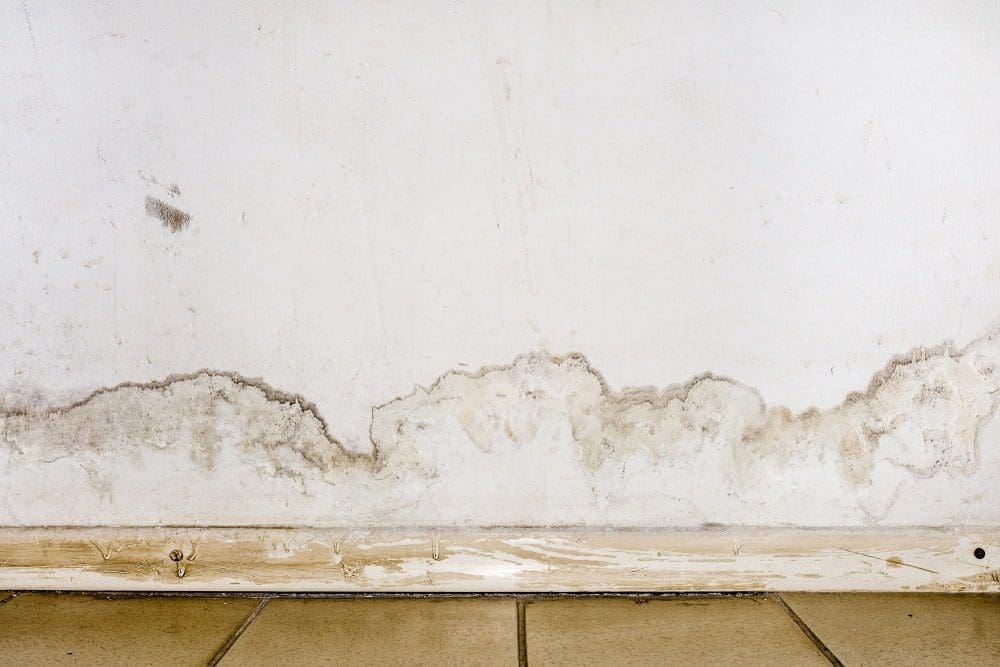
One of the first visible signs of water damage on baseboards is peeling or bubbling paint. You may notice small blisters forming or areas where the paint is lifting away from the trim.
Staining and Discoloration
Look for yellow, brown, or gray stains on the baseboard surface. Even if the baseboards feel dry, staining means water was present.
Warping, Swelling, or Separation from the Wall
When baseboards absorb water, they expand. This is especially true for MDF (medium-density fiberboard), which is commonly used in modern homes.
You might notice:
- The baseboard looks swollen or uneven
- Edges are no longer straight
- The trim pulling away from the wall
If your baseboard is separating from the wall, that usually indicates an active moisture issue.
Important note: MDF baseboards cannot be repaired once they swell. They will need to be replaced.
Soft or Spongy Feel
A quick way to check for more serious damage is to gently press on the baseboard. If it feels soft, spongy, or gives under pressure, the material has likely absorbed water and broken down internally. At this stage, replacement is almost always necessary.
Mold or Musty Odor
According to the EPA, mold can begin developing within 24 to 48 hours after moisture exposure. A musty smell is often the first sign of mold growth. In some cases, you may also see black, green, or white spots forming on or near the baseboard.
Common Causes of Baseboard Water Damage
Baseboard water damage can be caused by a variety of factors, including:
- Plumbing Leaks:
Pipes inside walls can leak slowly for months before becoming visible. By the time you notice baseboard damage, water may have already spread behind the wall. - Flooding or Stormwater Intrusion:
Heavy rain, flooding, or water entering through doors and windows can quickly soak baseboards and flooring. - Appliance Leaks:
Washing machines, refrigerators, and dishwashers can all leak without warning. These leaks often go unnoticed until nearby baseboards show signs of damage. - Roof Leaks Traveling Down Walls:
Water entering through the roof doesn’t always stay in the ceiling. It can travel down inside wall cavities and settle near the baseboard. - Condensation and Chronic Humidity:
Bathrooms, basements, and poorly ventilated areas can create long-term moisture exposure that slowly damages baseboards.
If you experience any of these issues, reach out to Dry Force for prompt water damage restoration services.
The Hidden Risk: What’s Happening Behind the Wall
Baseboard water damage is usually a surface-level sign of a bigger problem. In many cases, it’s one of the last things water affects. By the time baseboards show damage, moisture has often already been inside the wall for weeks, affecting drywall, insulation, and framing.
Mold can also grow behind the baseboard, even if the surface still looks fine. However, quick DIY fixes may trap moisture inside the wall and make the problem worse.
Flooring accounts for about 25% of water damage repairs, with walls and baseboards close behind due to shared moisture pathways. A professional moisture check can help you understand the full extent of the damage.
Repair or Replace? How To Decide
Most homeowners want to know whether their baseboards can be repaired or need to be replaced. The answer depends on how severe the damage is and how far it has spread.
Here’s how to decide between baseboard water damage repair and replacement:
| Condition | Repair | Replace |
|---|---|---|
| Minor staining, paint peeling | Yes | |
| Small cracks, no warping | Yes | |
| Swelling or warping | Yes | |
| MDF baseboard with water absorption | Yes | |
| Soft or spongy material | Yes | |
| Mold is visible on the surface | Yes |
In many cases, replacement is the more practical option, especially for MDF baseboards, which are common in modern homes and do not recover once they absorb water.
7 Steps to Replace a Baseboard With Water Damage
1. Make Sure the Wall is Dry
The wall behind the baseboard must be dry before you replace it. Failing to ensure the wall is dry and whatever caused it to be wet in the first place can lead to ongoing problems. If you need assistance removing baseboards with water damage, contact a restoration specialist in your area.
2. Save the Base Shoe
You don’t have to discard the existing base shoe at the bottom of the baseboard. Instead of removing the nail, you can use a nail set to drive a finish nail through the base shoe.
3. Remove the Baseboards
Next, you will need to remove the nails in the baseboards that have water stains or damage.
Tips & Insights: How to Fix Water-Damaged Furniture In Your Home
4. Measure
Carefully measure 1/16-inch to add to the length and place the molding for a tight fit.
5. Cut the New Baseboards
Before cutting the new baseboards with a backsaw or miter box, ensure you have measured it at least twice. Once you have confirmed the appropriate length, go ahead and cut.
6. Install the Baseboard to the Wall
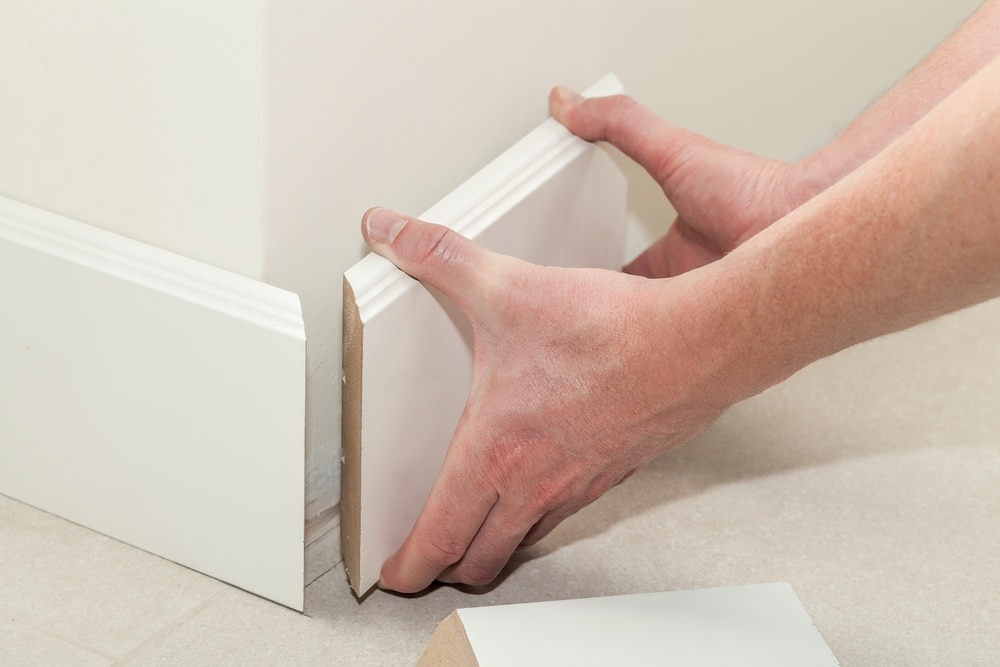
Now it’s time to get the new baseboard installed. Drill pilot holes and drive the finish nails into the sole plate and glue the outside corners.
7. Install the Base Shoe Molding
If you kept the old shoe molding or purchased new shoe molding, install it at the foot of the baseboard and attach it. Next, drill pilot holes in either the baseboard or floor, but not both.
Does Homeowners Insurance Cover Baseboard Water Damage?
Water damage to baseboards can be stressful, especially when considering how much the repair or replacement will cost.
Insurance coverage will depend on the cause of the damage and your specific policy. In most cases, sudden and accidental events, such as a burst pipe or an appliance failure, are covered by homeowners’ insurance. However, damage caused by slow leaks, ongoing moisture, or lack of maintenance is usually not included in standard policies.
If you’re considering a claim, documentation is key. Take clear photos of the damage as soon as you notice it and avoid making major repairs until you understand your coverage.
Dry Force can also help document the damage and support the claims process. For urgent situations, we also offer emergency water damage services.
How To Prevent Baseboard Water Damage
A few simple habits can prevent most baseboard water damage before it starts:
- Inspect Plumbing Regularly:
Check under sinks and behind appliances for small leaks before they spread. - Use Bathroom Exhaust Fans:
Run fans during showers and for at least 30 minutes after to reduce moisture buildup. - Maintain Proper Drainage:
Keep gutters clean and make sure water flows away from your foundation. - Seal Baseboard Edges:
Apply a water-resistant caulk where the baseboard meets the floor to limit moisture entry. - Control Indoor Humidity:
Use a dehumidifier in basements or high-moisture areas. - Know Your Shut-Off Valve Location:
Fast action can significantly reduce damage if a leak or burst pipe occurs.
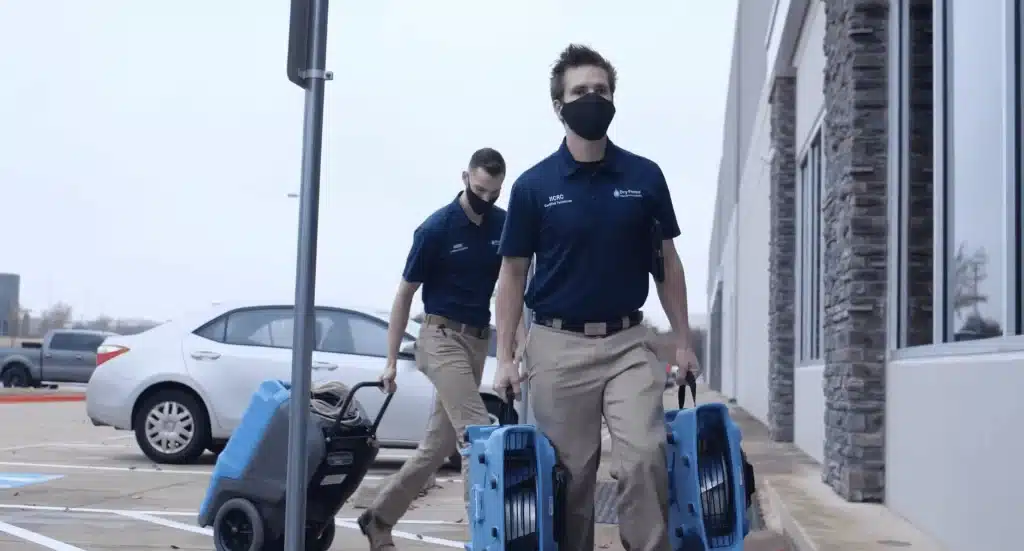
When Should You Call a Water Damage Professional?
Minor cosmetic damage can sometimes be handled on your own, but professional help is needed when the water damage is more serious.
Call a water damage restoration specialist if:
- You notice mold or a musty smell
- The baseboard feels soft or spongy
- You can’t identify the source of the water
- Multiple baseboards are affected
- The damage followed a flood or appliance failure
- The issue has been present for more than a few days
If you have any of these issues, call Dry Force for professional restoration right away.
FAQ — Baseboard Water Damage
What does baseboard water damage look like?
Baseboard water damage often shows up as peeling paint, discoloration, swelling, or separation from the wall. In more advanced cases, the material may feel soft or give under pressure. A musty smell can also indicate hidden moisture or early mold growth.
Can water-damaged baseboards be repaired?
Minor surface damage, like small stains or peeling paint, can sometimes be repaired. If the baseboard is swollen, soft, or warped, replacement is usually the better option. MDF baseboards, in particular, cannot be restored once they absorb water.
Should I replace or repair water-damaged baseboards?
If the damage is only cosmetic, baseboard water damage repair may be enough. If the material has absorbed water or changed shape, replacement is the better option. The professionals at Dry Force will identify and fix the source of the moisture to determine the best next steps.
How long does it take for mold to grow behind baseboards?
Mold can begin growing within 24 to 48 hours after water exposure. It often develops behind the baseboard before becoming visible. A musty smell is usually one of the first warning signs.
Can baseboard water damage spread to the wall?
Yes. Baseboard water damage often means moisture has already spread into the wall. Water can move through drywall, insulation, and framing, which is why it’s important to check beyond the surface before making repairs.

Contact Dry Force for Professional Baseboard Water Damage Repair
Baseboard water damage may seem minor, but it often indicates a more significant water issue. Catching it early helps limit damage, prevent mold, and reduce repair costs.
If you notice discoloration, musty odors, or soft or warped baseboards, contact Dry Force right away. We provide prompt, reliable water damage restoration to help protect what matters most.
Unsure about the source or extent of the damage? Schedule a professional inspection with our team.